


Concrete Giants
The great stages of carioca football
Concrete Giants
Where architecturemeets passion.
The Concrete Giants route showcases the two main stages of carioca football: the modern Nilton Santos Stadium and the iconic Maracanã.
Nilton Santos, home of Botafogo, stands out for its world-class infrastructure, a symbol of modernity and comfort. The Maracanã is the temple of world football, a cultural heritage that carries legendary moments in its history — the 1950 World Cup final, Pelé's thousandth goal and two World Cup finals.
Together, these stadiums represent the grandeur of sport in Rio de Janeiro — not just playing fields, but spaces of memory, passion and great cultural events.
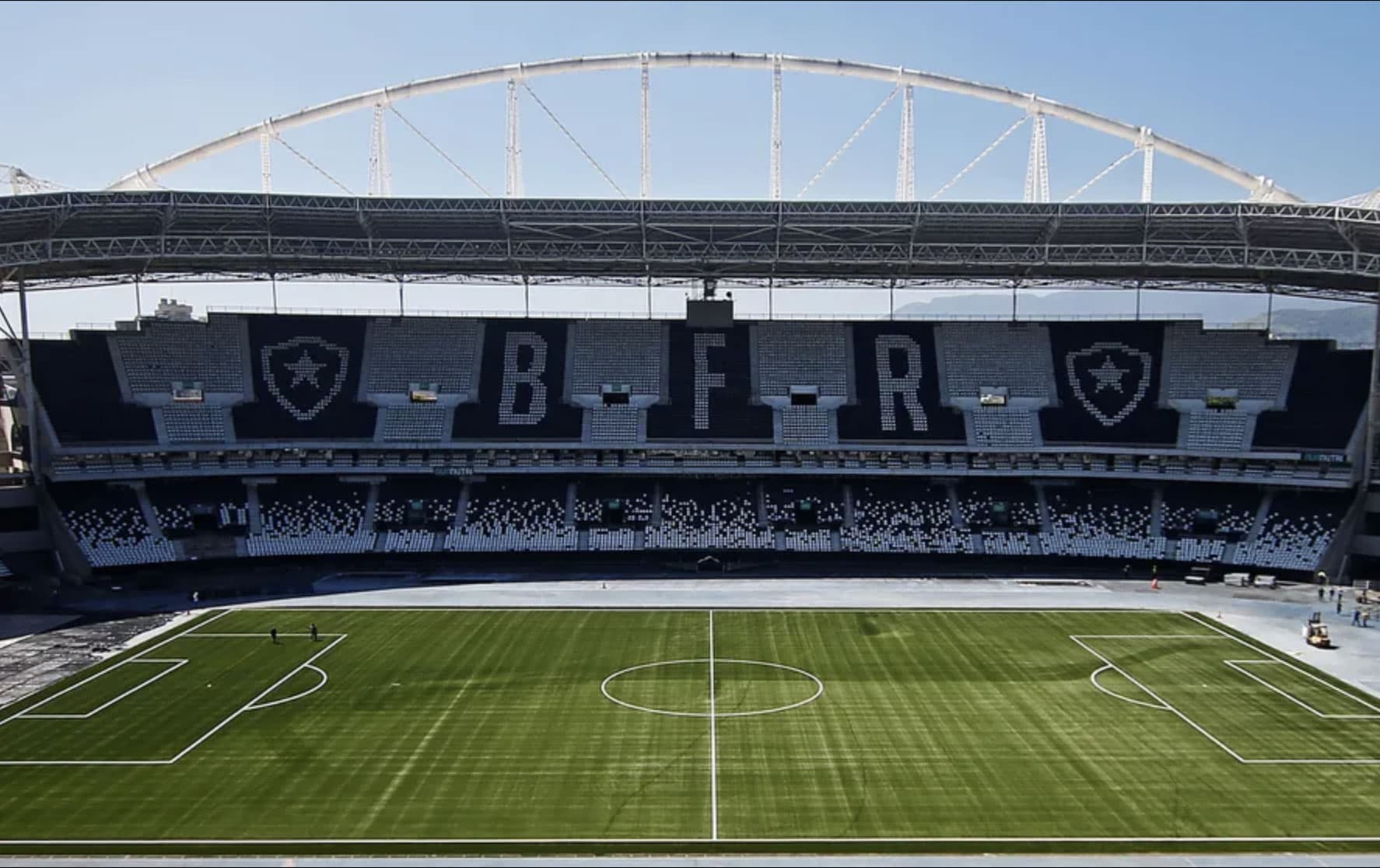

Estádio Nilton Santos
Estádio Olímpico Nilton Santos
Rua José dos Reis, 425
Engenho de Dentro, Zona Norte
Opened in 2007 for the Pan American Games, Nilton Santos Stadium, originally called the João Havelange Olympic Stadium, came under Botafogo's management through a concession from the Rio City Hall. In 2015 it received its current name in honor of the legendary left-back Nilton Santos, an idol of the club and the Brazilian National Team.
In the inaugural match, Botafogo beat Fluminense 2-1. The stadium features world-class infrastructure, suitable for football and athletics, with a nine-lane track, natural grass pitch and areas for pole vault, triple jump, long jump, high jump and javelin throw.
Among its curiosities, Nilton Santos has one of the best pitches in Brazil, frequently praised by players and coaches. It was the first stadium in the country to offer free Wi-Fi to fans and is considered the most modern stadium in Rio de Janeiro, with excellent visibility from all sectors.
The history of Nilton Santos Stadium is marked by modernity, achievements and passion. Whether in Botafogo matches, carioca derbies or international events, the Engenhão remains one of the great symbols of Brazilian sport — more than concrete and stands, it's the beating heart of a passionate fanbase and the pride of a historic club.
Highlights
Um dos melhores gramados do Brasil
Primeiro estádio do país com Wi-Fi gratuito para torcedores
Estádio mais moderno do Rio de Janeiro
Infraestrutura para futebol e atletismo (pista de 9 raias)
Palco dos Jogos Pan-Americanos de 2007 e dos Jogos Olímpicos de 2016
Nearby attraction
Imperator – Centro Cultural João Nogueira
Há mais de seis décadas faz parte da história do Rio. Já foi o maior cinema da América Latina, depois se tornou uma das principais casas de shows da cidade e, desde 2012, voltou com força total como centro cultural, levando o nome do inesquecível sambista João Nogueira.
Rua Dias da Cruz, 170, Méier · Segunda a domingo, das 13h às 22h
How to get there
Desembarcar na Estação Olímpica de Engenho de Dentro (ramais Japeri, Santa Cruz e Deodoro da SuperVia). Partindo da Central do Brasil, o trajeto leva cerca de 25 minutos. Quem utiliza o metrô pode fazer integração na estação Central do Brasil.
Tarifa: R$ 7,60
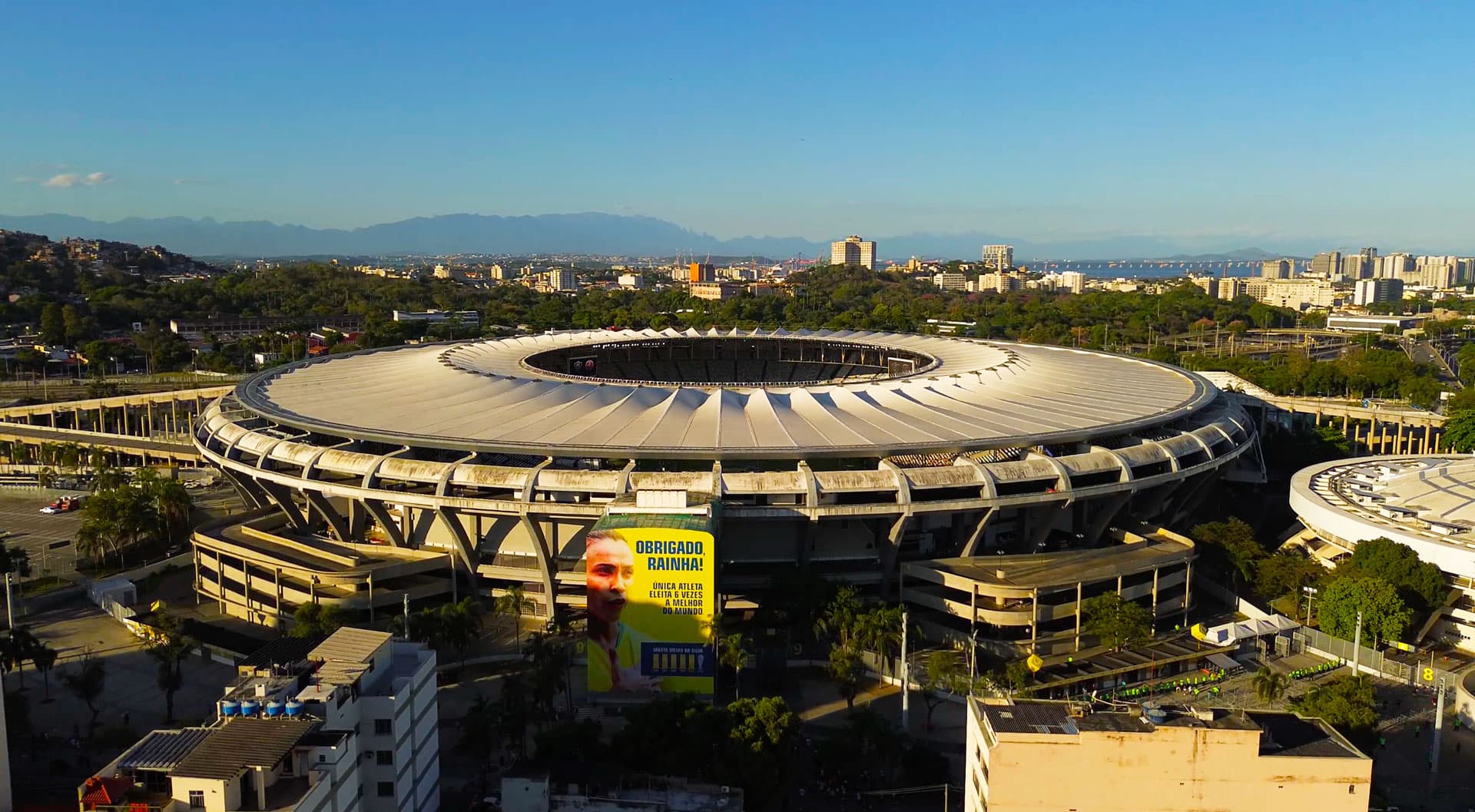

Maracanã
Estádio Jornalista Mário Filho
Av. Rei Pelé, s/n, Portão 2
Tijuca, Zona Norte
Opened on June 16, 1950, the Maracanã is one of the greatest symbols of world football and a true cultural heritage of Rio de Janeiro. Built for the 1950 World Cup, it symbolized Brazil's pride and modernity in the post-war period.
One month after its opening, it hosted the decisive match between Brazil and Uruguay, before an estimated crowd of 200,000 — the largest in football history. Brazil's 2-1 defeat was immortalized as the "Maracanazo", a national trauma that marked generations.
The name "Maracanã" comes from the river and the birds that inhabited the region. Since then, the stadium has been the stage for unforgettable moments in sport and culture, including two World Cup finals, the Olympic Games, the blessing of Pope John Paul II and legendary concerts by artists like Frank Sinatra and Tina Turner.
Fully renovated for the 2014 World Cup, the stadium was modernized and now holds 78,838 fans, meeting the highest international standards of safety, comfort and sustainability. The traditional Maracanã Tour is one of the most popular attractions for tourists and locals, with visits to the historical collection, dressing room, press room and mixed zone.
Currently, the Maracanã is managed by Flamengo and Fluminense, who share its administration under a concession from the Rio de Janeiro State Government, keeping alive the tradition of one of the most iconic and exciting stages in world football.
Highlights
Palco de duas finais de Copa do Mundo (1950 e 2014)
Local do milésimo gol de Pelé (1969)
Recorde histórico de 200 mil pessoas em uma partida
Patrimônio cultural do Rio de Janeiro
Tour Maracanã: acervo histórico, vestiário, sala de imprensa (~50 min)
Palco dos Jogos Olímpicos de 2016
Nearby attraction
Quinta da Boa Vista
Um dos maiores parques urbanos da cidade, com aproximadamente 155 mil m². Localizada em São Cristóvão, mantém os jardins planejados pelo paisagista francês Auguste Glaziou. Abriga o BioParque, novo modelo de zoológico voltado ao bem-estar animal.
How to get there
Linha 2: estações Maracanã (portões A, B, C) e São Cristóvão (portões D, E, F). Linha 1: estação São Francisco Xavier (portões C, D, E). Da Zona Sul/Barra da Tijuca, usar Linhas 4/1 com integração para Linha 2.
Tarifa: R$ 7,90
Estações Maracanã e São Cristóvão da SuperVia, integradas à Linha 2 do metrô.
Tarifa: R$ 7,60